UNDERSTANDING THE PROGRAM FRAMEWORK
The Science Behind the Better Together Method
Our Better Together Programs use a assessment tool called MindTime®. It reveals your unique thinking style—how your mind naturally processes information and approaches problems. Your individual assessment identifies whether you’re primarily oriented toward:
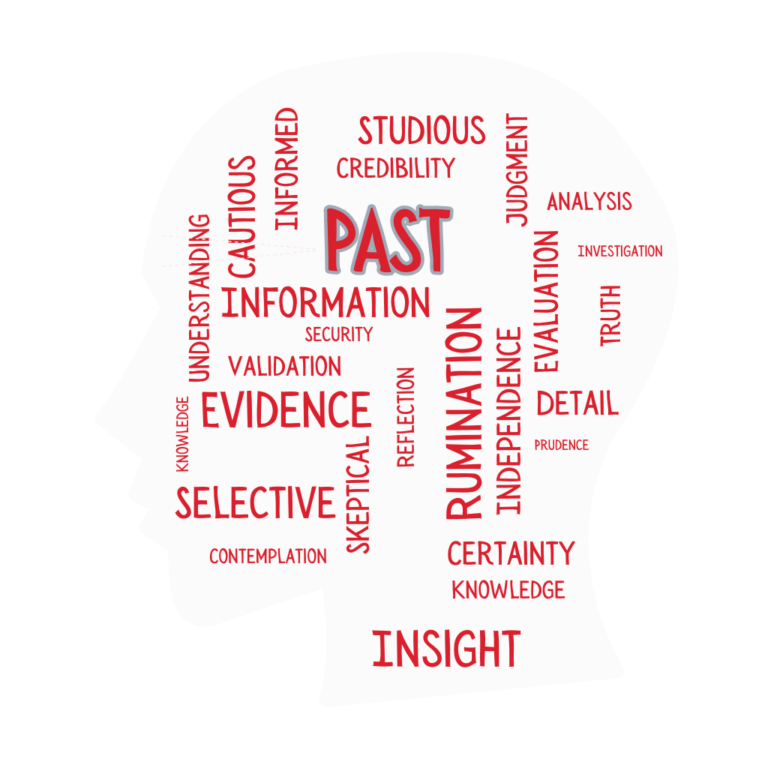
Certainty (Past): Focused on what’s known, validated, and established through evidence
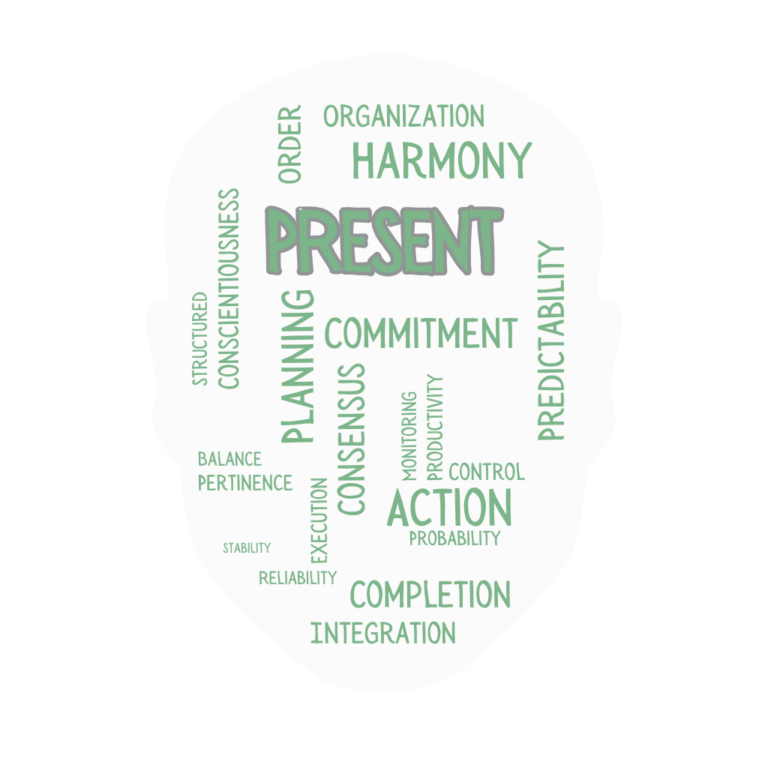
Probability (Present): Centered on current realities, practical data, and actionable next steps
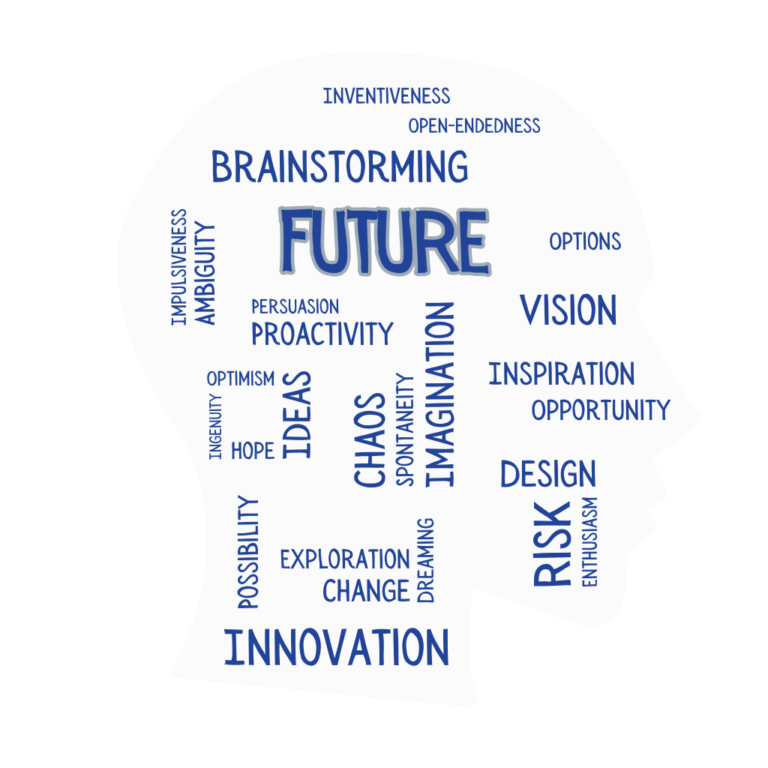
Possibility (Future): Driven by innovation, exploration, and what could be
Understanding these fundamental orientations unlocks a new way of seeing yourself and others—not as personality types, but as distinct cognitive signatures.

How Teams Use MindTime Assessments
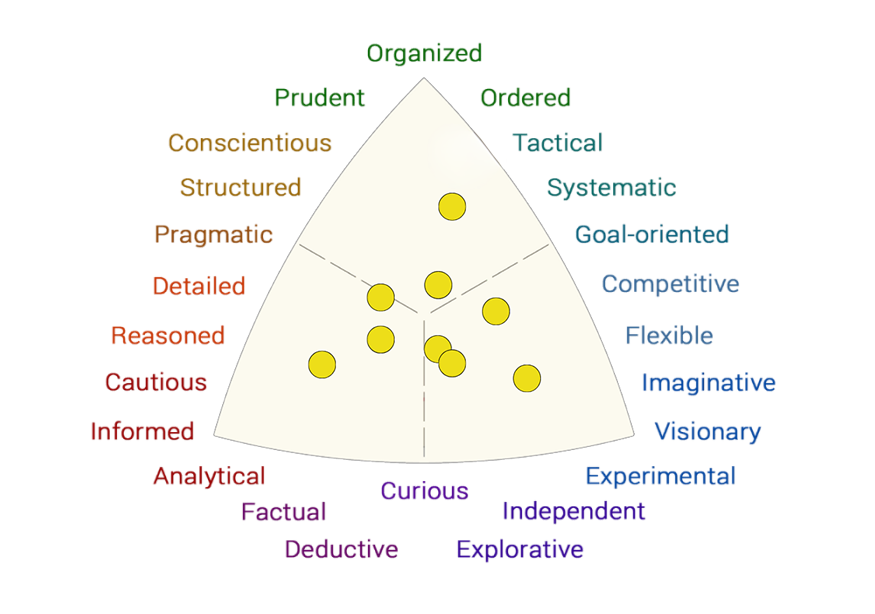
Organizations use MindTime to transform how teams work together—and it starts with a simple but powerful visual: a map with dots.
Each dot represents one person on your team, positioned according to their thinking style. When you see all those dots together, patterns emerge that are invisible in day-to-day work. Suddenly you can see your team’s cognitive shape—where energy naturally clusters, where gaps exist, and why certain conversations keep getting stuck.
Here’s what teams discover when they look at their map:
See Your Team’s Cognitive Balance
Understand Your Team’s Pace
Spot What’s Concrete vs. Abstract
Identify the Missing Links
Navigate the Full Innovation Cycle
Build Smarter Teams from the Start